Stablecoin Education · Critical Reading Skill
Stablecoin Reserve Transparency — BSP Audit Framework + Pinoy Holder Education (Paano Magbasa ng Attestation)
Sa bawat USDT, USDC, FDUSD, PYUSD na hinahawak ng Pinoy holder, may "reserve" sa likod ng coin — 1:1 backed daw sa USD. Pero ang katotohanan ay mas complex. May "attestation," may "audit," may "reserve composition," may "redemption SLA." Para sa Pinoy holder na nais mag-protect ng pera, eto ang practical guide — paano magbasa ng reserve report, ano ang BSP framework, at anong red flags na dapat tingnan.
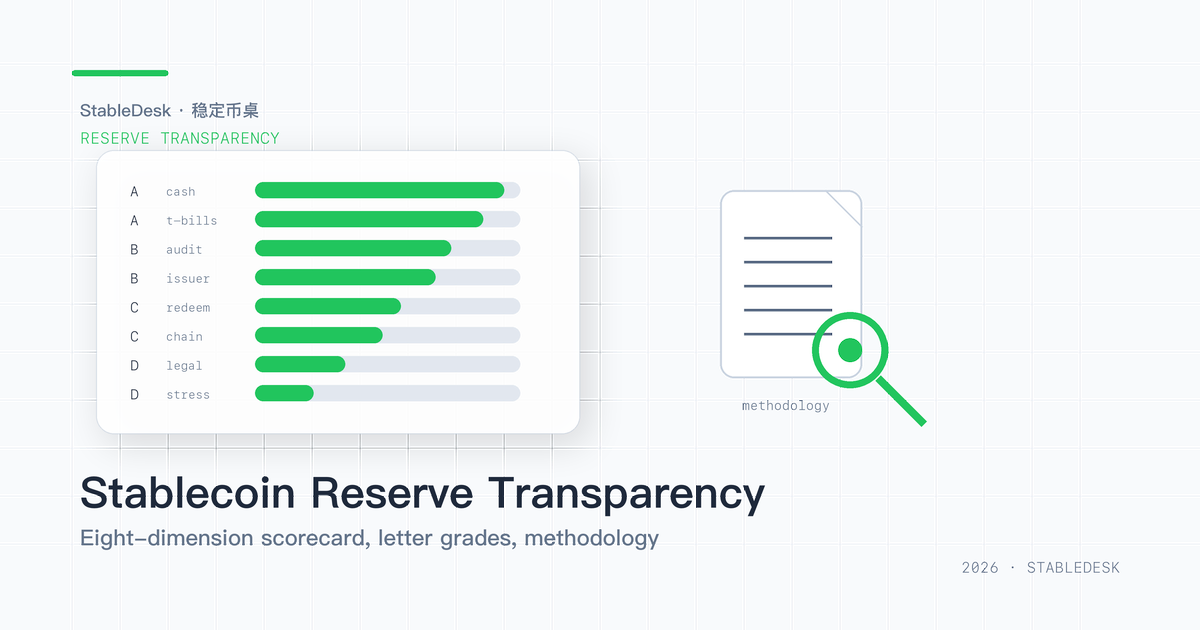
Anong nilalaman
TL;DR — 5 takeaways
- Attestation ≠ audit: Attestation ay snapshot na tinitingnan ng auditor sa specific date. Audit ay deeper investigation sa internal controls + reserve. Lahat ng major stablecoin (USDT, USDC, FDUSD, PYUSD) ay nag-publish ng attestation. Konting nag-publish ng full audit.
- Reserve composition matters: 100% USD-backed ay misleading. Mas importante — anong klase ng USD-equivalent asset? Cash, T-bills, commercial paper, atbp.? Bawat klase ay may iba't ibang risk.
- BSP framework (Pinoy market): Walang specific Pinoy stablecoin issuer regulation. Pero ang BSP Circular 1108 ay nag-regulate sa VASP (exchange). Project Agila ay future framework para sa PHP-CBDC, hindi private stablecoin.
- Reserve ratio dapat >100%: Sa Q1 2026: USDT 105%, USDC 101%, FDUSD 103%, PYUSD 102%. Lahat ay above peg. Pero historical (2018-2019) ang USDT ay nasa ibaba ng 100% sa ilang panahon (NYAG findings).
- Praktikal para sa Pinoy holder: Mag-bookmark ng transparency page ng bawat coin. I-check quarterly. Hindi panic sa rumor — basa primary source.
Attestation vs audit — ano ang pagkakaiba?
Ano ang attestation?
Ang attestation ay isang "snapshot review" — ang auditor ay tinitingnan ang reserve sa specific date (e.g., Marso 31, 2026, 23:59:59), nag-verify na may sufficient reserves, at nag-publish ng report.
Ang attestation ay:
- Limited scope — specific point sa oras lang
- Walang investigation ng internal controls
- Walang verification ng historical transactions
- Walang opinion sa "going concern" (kakayahan na magpatuloy bilang business)
Sa Pinoy analogy — parang nag-check ka sa kaibigan kung may ₱100,000 sa wallet niya sa specific minuto. Hindi ka nag-imbestiga kung saan nanggaling, kung paano siya nakakuha, kung magagamit niya ito sa hinaharap. Tinitingnan mo lang sa moment na iyon na may ₱100K nga.
Ano ang full audit?
Ang full audit ay mas malalim:
- Coverage sa multi-year period (typically 12 months)
- Verification ng internal controls (paano nag-flow ang pera, sino ang nag-approve ng mga transaction)
- Investigation ng historical transactions (sample-based)
- Opinion sa "going concern"
- Auditor's professional liability sa report
Sa Pinoy analogy — parang nag-imbestiga ka sa kaibigan ng buong taon: paano nakakuha ng pera, paano gumagastos, kung legal ang source, kung kakayanin ang next year. Mas matagal, mas mahal, mas mahirap pero mas confidence-building.
Bakit attestation lang ang gawain ng karamihan?
Tatlong dahilan:
- Cost: Ang full audit ay 5-10x mas mahal kaysa attestation.
- Frequency: Attestation pwede monthly. Audit ay typically annual.
- Complexity ng crypto business: Mga auditor (lalo na Big-4) ay nag-decline ng full audit ng crypto company sa 2020-2024 era dahil sa risk averse — hindi natuto ang crypto industry sa US accounting standards. Sa 2024-2026, slowly nagbubukas ang Big-4 sa crypto audit, pero limited.
Anong meron sa karaniwang stablecoin?
Q1 2026 status:
- USDT: Quarterly attestation ni BDO Italia. No full audit.
- USDC: Monthly attestation ni Grant Thornton. Annual full audit ni Deloitte.
- FDUSD: Monthly attestation ni Prescient Assurance. No full audit yet.
- PYUSD: Monthly attestation ni Withum. No full audit yet.
Ang USDC ay nasa tuktok sa rigor (monthly attestation + annual audit). USDT, FDUSD, PYUSD ay attestation-only.
Reserve composition — anong categories
"100% backed sa USD" ay misleading. Sa reality, ang "reserves" ay iba't ibang asset categories. Eto ang mga ito:
1. Cash sa bank deposit
Pinakaligtas. Pero may residual risk: bank concentration (SVB 2023 case), bank holiday, regulatory freeze. Lower yield (mga 1-3% sa current rates).
2. U.S. Treasury bills (T-bills)
Short-duration (mga 1-13 weeks) US government debt. Pinakaligtas sa low-risk asset category. Highly liquid. Yield: 4-5% sa Q1 2026.
Para sa stablecoin issuer, ito ang preferred asset — high liquidity, low risk, decent yield.
3. Reverse repurchase agreements (reverse repos)
Short-term loans collateralized sa U.S. Treasury. Similar safety sa direct T-bills, slightly higher yield. Standard ng institutional money market.
4. Commercial paper
Short-term unsecured corporate debt. May credit risk sa borrowing company. Pre-2022, ito ang malaking bahagi ng USDT reserves — nag-concern sa regulator dahil sa concentration sa specific Chinese real estate developers (na nag-default). Pagkatapos ng 2022, na-remove ng USDT ang commercial paper.
Sa Q1 2026: walang major stablecoin na may significant commercial paper sa reserves.
5. Secured loans
Loans na may collateral. Sa USDT historical reserves, may "secured loans" category — mga 5-10% ng reserves. Hindi specified ang collateral type publicly. Ito ay nag-residual concern, pero mas mababa kaysa pre-2022 commercial paper exposure.
6. Corporate bonds
Mas longer-duration corporate debt. Konting stablecoin ang may corporate bond sa reserves (USDT historical). Mas mahaba ang duration, mas malaki ang interest rate risk.
7. Precious metals (gold)
Sa USDT historical reserves (2022-2024), may "precious metals" category — mga 4% ng reserves. Hindi conventional. Sa Q1 2026, mas konti.
8. Bitcoin (sa USDT only)
Sa 2023 onwards, ang USDT ay nag-add ng Bitcoin sa reserves — mga 3% sa Q1 2026. Controversial — ang BTC ay volatile asset, hindi typical "stable" backing. Pero sa Tether's strategy, ito ay hedge laban sa long-term USD debasement.
9. Other investments
Catch-all category. Pwedeng kasama ang real estate, private credit, alternative assets. Hindi specifically disclosed. Sa USDT historical, mga 5-10% ng reserves. Sa Q1 2026, mas konti.
Reserve composition matters — eksempel
Pareho na 105% reserve ratio, pero iba ang composition:
- Stablecoin A: 100% T-bills + 5% cash. Reserve ratio 105%. Pure low-risk.
- Stablecoin B: 60% T-bills + 25% commercial paper + 15% secured loans + 5% precious metals. Reserve ratio 105%. Same ratio, pero higher tail risk.
Sa SVB-style stress event, ang Stablecoin A ay mag-survive nang walang problema. Ang Stablecoin B ay maaaring mag-experience ng partial loss sa commercial paper at secured loans.
BSP framework para sa Pinoy market
BSP Circular 1108 (2021) — VASP regulation
Ang BSP Circular No. 1108 ay nag-regulate sa Virtual Asset Service Providers (VASP) sa Pilipinas. Ito ay applies sa exchanges (Coins.ph, PDAX, Maya Bank crypto, atbp.), hindi sa stablecoin issuer.
Anong requirement para sa VASP:
- Registration sa BSP at AMLC
- Maintaining operational reserve (mga 5-10% ng customer balances sa fiat)
- Customer asset segregation (hindi i-comingle sa company operations)
- Daily reconciliation of customer balances
- Quarterly liquidity reporting sa BSP
Ang implication para sa Pinoy holder — sa Coins.ph at PDAX wallet mo, may operational protection sa BSP-mandated requirements. Pero sa underlying stablecoin (USDT/USDC), walang BSP-specific protection — depends sa issuer's own regulator.
Walang specific stablecoin issuer regulation sa Pilipinas
Walang BSP framework na specific sa stablecoin issuer. Walang mandato para sa Pinoy-issued stablecoin (e.g., kung mayroon mag-launch ng PHPC, ano ang requirement). Walang oversight sa Tether/Circle/Paxos operations vis-à-vis Pinoy users.
Ito ay regulatory gap. Sa karaniwan, ang Pinoy holder ay nag-rely sa US/EU/HK regulator ng issuer.
Project Agila — future framework
Ang BSP Project Agila ay CBDC pilot na nagsimula 2023. Sa Q1 2026, ang status:
- Phase 1 (wholesale CBDC pilot) — kumpleto 2024
- Phase 2 (retail CBDC consultation) — ongoing 2025-2026
- Phase 3 (retail PHP-CBDC launch) — target 2027-2028
Ang Project Agila ay focused sa BSP-issued CBDC (peso-pegged, issued ng central bank). Ito ay hindi private stablecoin (gaya ng USDT). Walang direct relevance sa USDT/USDC holder.
BIR Memorandum Circular No. 76-2025
Tax-related. Para sa Pinoy holder, importante para sa documentation:
- Crypto-to-crypto swap: technically taxable event, pero zero-gain sa stablecoin-to-stablecoin (1:1 swap).
- Crypto-to-fiat sale: reportable bilang gain/loss.
- Hold-to-hold: hindi taxable.
AMLC threshold
₱500,000 aggregated sa 5 araw — trigger ng Covered Transaction Report (CTR). Hindi penalty, automatic compliance reporting. Para sa karaniwang Pinoy holder, hindi nag-trigger sa normal use. Pero kung may large remittance o trading volume, mag-aggregate ng documentation.
Paano magbasa ng attestation step-by-step
Bilang eksempel, gamitin natin ang USDT Q1 2026 attestation (BDO Italia). Sequence:
Step 1: Pumunta sa transparency page
Para sa USDT: tether.to/en/transparency. Para sa USDC: circle.com/transparency. Para sa FDUSD: firstdigitallabs.com/transparency. Para sa PYUSD: paxos.com/pyusd.
Step 2: Download ang latest attestation PDF
Karamihan ng attestation ay 5-15 pahinang PDF. Magbasa ng buong dokumento (or scan critical sections).
Step 3: Hanapin ang reserve total
Sa unang pahina o sa "Independent Accountants' Report" section, hahanapin mo ang:
- Total reserves: Halagang ito ay dapat >= Total circulation.
- Total circulation (USDT minted/issued): Specific halagang.
- Reserve ratio: Computed as Reserves / Circulation. Dapat >100%.
Sa USDT Q1 2026: Reserves = ~$154B, Circulation = ~$150B. Ratio = ~103%.
Step 4: Tingnan ang reserve composition table
Karaniwan, may table na nagpapakita ng asset categories at percentage. Dapat:
- >70% T-bills + cash + reverse repos (low-risk assets)
- <30% sa secured loans, corporate bonds, commercial paper (medium-risk)
- <10% sa precious metals, BTC, other (higher-risk)
Kung ang composition ay mas conservative, mas mainam para sa risk-averse holder.
Step 5: Tingnan ang auditor's opinion language
Sa attestation report, may "opinion" section. Dapat:
- "Unqualified opinion" o "Without qualification": Auditor confirms — reserves match issued tokens, sa specific date.
- "Qualified opinion": May caveat o limitation. Mag-investigate.
- "Adverse opinion" o "Disclaimer": Major issue. Red flag.
Sa karaniwan, ang stablecoin attestation ay unqualified. Kung qualified, basahin ang specific limitation.
Step 6: Compare sa previous quarters
Ang historical trend ay informative. Mag-look ng:
- Trend sa reserve ratio (stable >100% o nag-fluctuate)
- Composition shift (more T-bills = more conservative, more "other" = less transparent)
- Auditor consistency (same auditor o nagbago — nagbago, bakit?)
Step 7: Mag-bookmark
Mag-set ng calendar reminder na mag-check ng attestation bawat 3 buwan. 10 minuto lang sa quarter.
Red flags — kailan dapat mag-alala
Red flag 1: Skipped attestation
Kung walang nag-publish ang issuer ng attestation sa nakatakdang frequency (e.g., USDC monthly, missed sa April 2026 — red flag). Tumalon ng 6+ buwan na walang attestation — major red flag.
Red flag 2: Auditor change na walang explanation
Kung nagbago ng auditor (e.g., USDT pre-2022 ay Moore Cayman, post-2022 ay BDO Italia), at walang explanation ng dahilan — investigate. Sometimes, ang auditor mismo ang nag-resign dahil sa concerns. Pero common din ang scaling up (small to big firm) — kailangang malaman ang context.
Red flag 3: Reserve ratio bumaba <100%
Kung sa attestation, ang reserves < circulation — automatic red flag. Sa USDT historical (2018-2019), ito ay nangyari (NYAG findings retroactive). Sa current stablecoin, hindi pa nangyayari ulit — pero sa hypothetical scenario, exit immediately.
Red flag 4: Composition shift sa higher-risk
Kung biglang lumipat ang composition (e.g., 50% T-bills → 30% T-bills, 20% sa "secured loans" o "other investments") — investigate. Maaaring may yield-seeking behavior na hindi compensated sa transparency.
Red flag 5: Banking concentration
Kung ang reserves ay nasa isang banko lang (e.g., 100% sa Bank A) — concentration risk. Sa SVB stress (Marso 2023, USDC), ang 8% concentration sa SVB ay enough para sa $0.87 depeg. Mas optimal — multiple banks (HSBC + Standard Chartered, etc.).
Red flag 6: Regulator action
Kung may NYDFS/SEC/CFTC/FATF/HKMA action laban sa issuer — investigate sa primary source. Hindi panic sa Twitter rumor. Basa sa official press release. Sa BUSD case (Pebrero 2023), nag-trigger ang NYDFS order ng orderly wind-down — wala namang user loss.
Red flag 7: "Going concern" language
Sa full audit reports (rare sa stablecoin), kung may "going concern doubt" — significant red flag.
Red flag 8: Sustained depeg >2 days
Sa historical, ang USDT depeg events ay typically 24-72 oras. Kung lumampas ng 5 araw na nasa ibaba ng $0.99 — investigate. Maaaring may issuer-specific problem na hindi pa public.
Para sa Pinoy holder, ang practical rule — kung may 2+ red flag sa parehong oras, exit position kahit may partial loss. Mas mabuting mag-realize ng 1% loss sa exit kaysa hawak ng "going to zero" position.
Compare ng USDT, USDC, FDUSD, PYUSD
| Dimension | USDT | USDC | FDUSD | PYUSD |
|---|---|---|---|---|
| Attestation frequency | Quarterly | Monthly | Monthly | Monthly |
| Auditor | BDO Italia | Grant Thornton (attestation) + Deloitte (audit) | Prescient Assurance | Withum |
| Full audit? | Hindi | Oo (annual) | Hindi | Hindi |
| T-bills % | 81% | 95% | 92% | 89% |
| Cash % | 8% | 5% | 8% | 3% |
| Other % | 11% (mixed: secured loans, BTC, precious metals) | 0% | 0% | 8% (reverse repos) |
| Reserve ratio Q1 2026 | 105% | 101% | 103% | 102% |
| Primary regulator | Offshore (BVI, El Salvador) | NYDFS + FinCEN | HKMA | NYDFS |
| Major depeg history | 6 events ($0.92 lowest) | 1 event ($0.87 SVB) | 0 | 0 |
| Pinoy market support | High (Coins.ph, PDAX, Binance P2P) | High (Coins.ph, Binance) | Low (Binance only) | Low (Binance only) |
Conclusion mula sa transparency lens
- USDC: Pinakatransparent — monthly attestation + annual audit. Pero may concentrated banking risk (SVB historical).
- FDUSD: Mas conservative ang composition. Regulated sa HKMA (formal license). Pero bata pa.
- USDT: Pinakamatagal ang track record. Pero may mixed assets (BTC, precious metals, secured loans). Quarterly attestation lang.
- PYUSD: Reasonable composition. Reverse repos category ay slightly unusual pero safe. Bata pa, walang Pinoy market support.
Para sa transparency-conscious Pinoy holder: USDC ang preferred. Para sa transit/trading volume: USDT ay sufficient. Para sa diversification: 60% USDC + 40% USDT mix.
Para sa Pinoy holder na nais mag-monitor ng reserve real-time: Ang Binance ay nag-host ng lahat ng major stablecoin (USDT, USDC, FDUSD, PYUSD) sa one platform. Para sa account setup at 20% trading fee discount, gamitin ang aming invite code BN16188.*
* Discount rate set ng Binance Affiliate program. Tumatanggap kami ng promotional service fee — walang karagdagang gastos sayo. Buong disclosure →
FAQ
Bakit walang Pinoy auditor sa lahat ng major stablecoin?
Ang stablecoin issuers ay offshore o foreign-domiciled (Tether sa BVI, Circle sa US, First Digital sa HK, Paxos sa US). Ang auditor selection ay base sa jurisdiction. Walang issuer sa Pilipinas, kaya walang Pinoy auditor.
Pwede ba akong mag-redeem direct sa Tether/Circle bilang Pinoy?
Theoretical, oo. Sa Tether, may "Redemption" page sa tether.to. Sa Circle, may "Mint/Burn" interface sa Circle Mint. Pero may friction: US/EU-centric KYC, minimum $100K (institutional), correspondent banking sa PH. Para sa retail Pinoy (<$10K), mas practical ang exchange-mediated cash-out sa Coins.ph.
Anong BSP ay nag-monitor ng stablecoin reserves?
Hindi. Ang BSP ay nag-monitor ng VASP (exchange) operations, hindi sa stablecoin issuer reserves. Ang Pinoy holder ay nag-rely sa US/HK regulator ng issuer.
Pwede ba ang PHP stablecoin (peso-backed)?
Sa current regulatory framework, walang formal pathway para sa private issuer mag-launch ng PHPC. Sa BSP Project Agila, may potential para sa BSP-issued PHP-CBDC sa 2027-2028. Walang plans para sa private PHP stablecoin.
Bakit hindi 100% T-bills lahat?
T-bills ay short-duration (max 13 weeks). Para sa stablecoin issuer, kailangang mag-roll-over bawat quarter. May operational cost. Ang ilang issuer ay nag-include ng longer-duration assets para sa diversification at higher yield. Pero ang trade-off ay mas mataas na risk.
Anong gagawin kung walang sufficient transparency?
Para sa stablecoin na may insufficient transparency (e.g., walang regular attestation, walang composition disclosure), iwasan. Ang transparency ay baseline requirement — kung hindi mag-meet, hindi worth ang risk. Sa Q1 2026, lahat ng major stablecoin (USDT, USDC, FDUSD, PYUSD) ay may sufficient transparency.
Naapektuhan ba ang Coins.ph ng stablecoin issuer risk?
Hindi direct. Ang Coins.ph ay nag-hold ng stablecoin (USDT, USDC) sa pamamagitan ng customer (1:1 segregated). Kung may issue sa stablecoin issuer, ang Coins.ph mismo ay nag-coordinate sa wind-down. Walang direct loss sa Coins.ph operational business — pero kung ang underlying stablecoin ay nag-decline, ang Coins.ph customer balance (sa USDT/USDC value) ay nag-decline rin.
Mas safe ba ang FDUSD kaysa USDC?
Iba ang risk profile. FDUSD ay mas conservative composition (no commercial paper history). USDC ay may longer track record + annual audit. Sa absolute terms, parehong reasonable safety. Sa SVB stress (Marso 2023), ang USDC ang nag-depeg (hindi FDUSD — kasi launched after SVB). Hindi pa nakaranas ang FDUSD ng similar stress. Para sa ultra-conservative: FDUSD slightly mas conservative. Para sa established: USDC.
Susunod na hakbang
- Para sa Tether case study: Tether NYAG 2021 Settlement.
- Para sa USDC SVB stress: USDC SVB Depeg 48 Hours.
- Para sa FDUSD profile: FDUSD Hong Kong Stablecoin.
- Para sa USDT depeg history: Bakit Nag-de-depeg ang USDT.
Disclaimer: Hindi ito financial advice. Tingnan ang disclaimer.